1930s Top Stars
Marx Brothers: Top 1930s Stars #25

For older Americans the name Marx often brings to mind the Marx Brothers, especially Groucho, whose glasses-and-mustache disguise remains an American cultural icon.
The Marx Brothers were among the most influential comedians in American entertainment, with films such as Duck Soup and A Night at the Opera remaining classics.
For younger Americans the situation is often reversed. Many younger Americans have never seen a Marx Brothers film, while the name Karl Marx is commonly encountered in school history, political science, economics, or discussions of socialism and communism.
The Marx Brothers remain respected by film buffs and comedy historians, but they are no longer part of mainstream popular culture.
The Marx Brothers were among the most influential comedians in American entertainment, with films such as Duck Soup and A Night at the Opera remaining classics.
For younger Americans the situation is often reversed. Many younger Americans have never seen a Marx Brothers film, while the name Karl Marx is commonly encountered in school history, political science, economics, or discussions of socialism and communism.
The Marx Brothers remain respected by film buffs and comedy historians, but they are no longer part of mainstream popular culture.
Barbara Stanwyck: 1930s Top Star #24
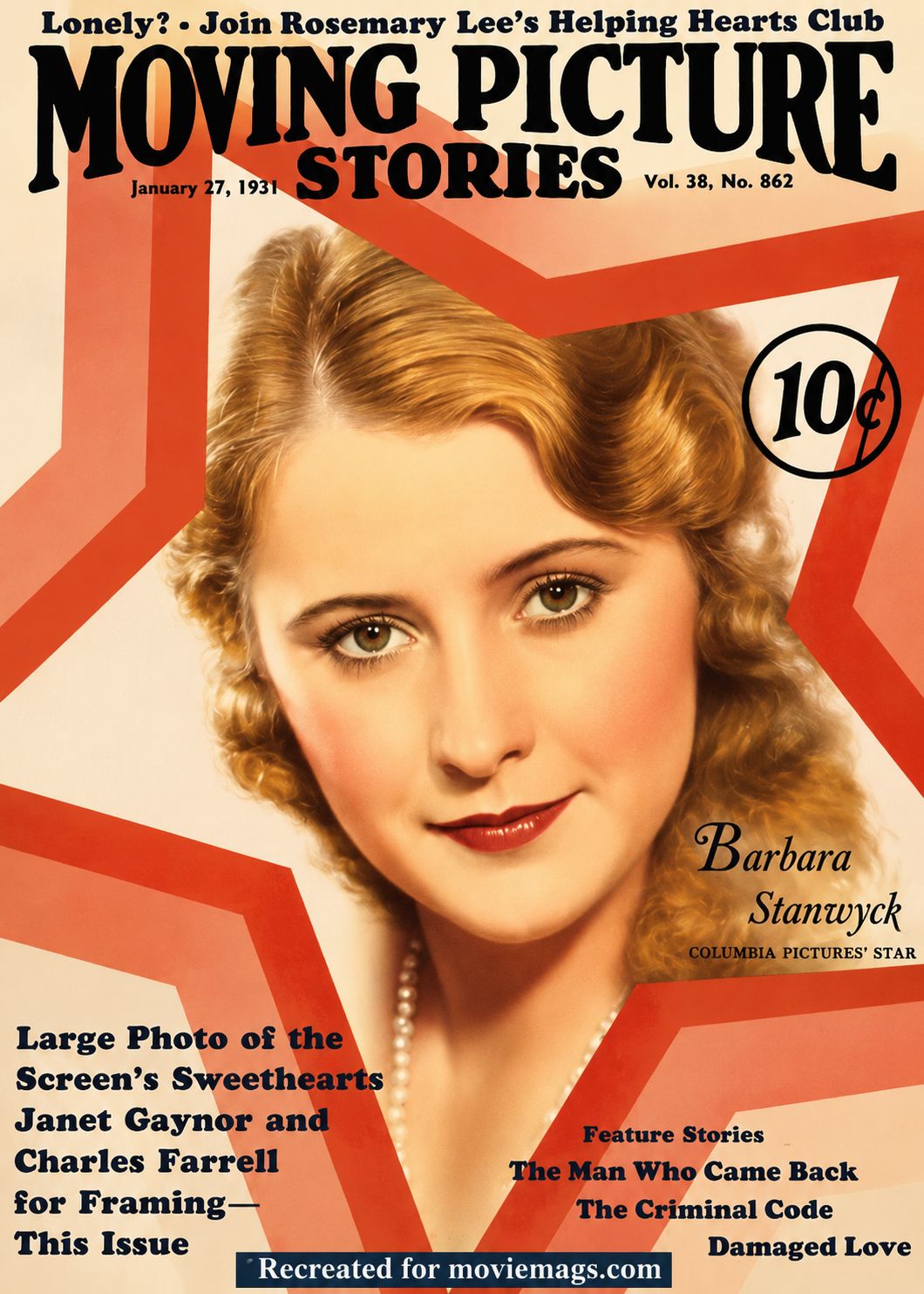
Barbara Stanwyck's first major commercial and critical successes occurred between 1926 and 1927 on Broadway, followed closely by her Hollywood film breakthrough in 1930. After working as a chorus dancer, she achieved her first dramatic acting triumphs which launched her legendary 60-year career.
After her initial 1929 talking pictures underperformed, director Frank Capra cast her in Ladies of Leisure (1930). The film became a roaring hit, serving as her official Hollywood breakthrough and establishing her as a formidable screen actress.
Following this definitive window of initial success, she quickly solidified her stardom in the early 1930s with hits like Night Nurse (1931) and Baby Face (1933).
After her initial 1929 talking pictures underperformed, director Frank Capra cast her in Ladies of Leisure (1930). The film became a roaring hit, serving as her official Hollywood breakthrough and establishing her as a formidable screen actress.
Following this definitive window of initial success, she quickly solidified her stardom in the early 1930s with hits like Night Nurse (1931) and Baby Face (1933).
James Stewart 1930s Top Star #23
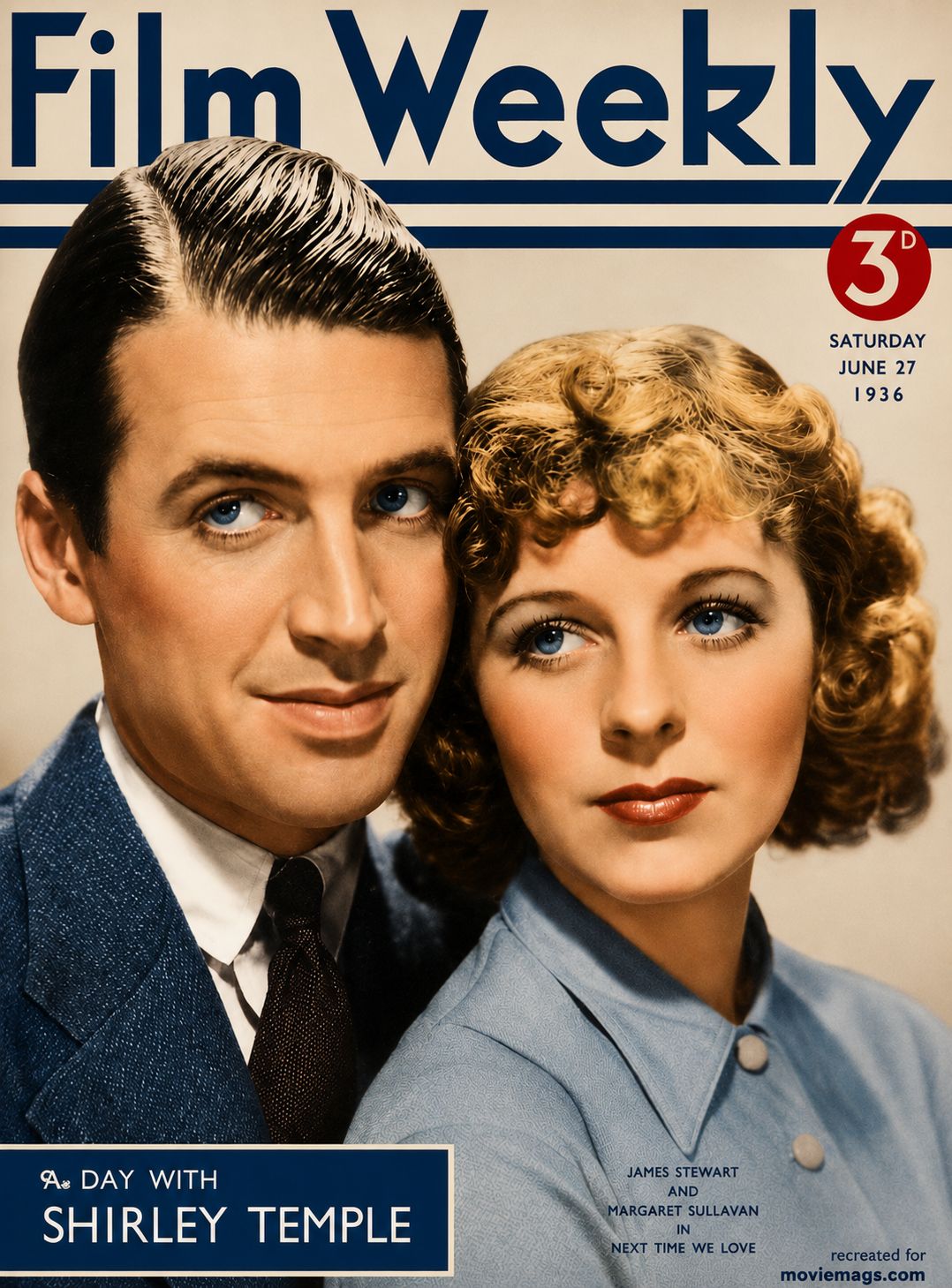
James Stewart first appeared in magazines around 1935 and 1936. This happened right after MGM signed him to a contract. Before this time, he worked mostly on Broadway and was not yet a movie star.
His first magazine covers showed him with other actors to promote romantic dramas. They did not show him alone as a big star. In the mid-1930s, movie studios did not see him as a leading man yet. They just saw him as a young actor with a bright future.
His first magazine covers showed him with other actors to promote romantic dramas. They did not show him alone as a big star. In the mid-1930s, movie studios did not see him as a leading man yet. They just saw him as a young actor with a bright future.
Jean Harlow first cover.
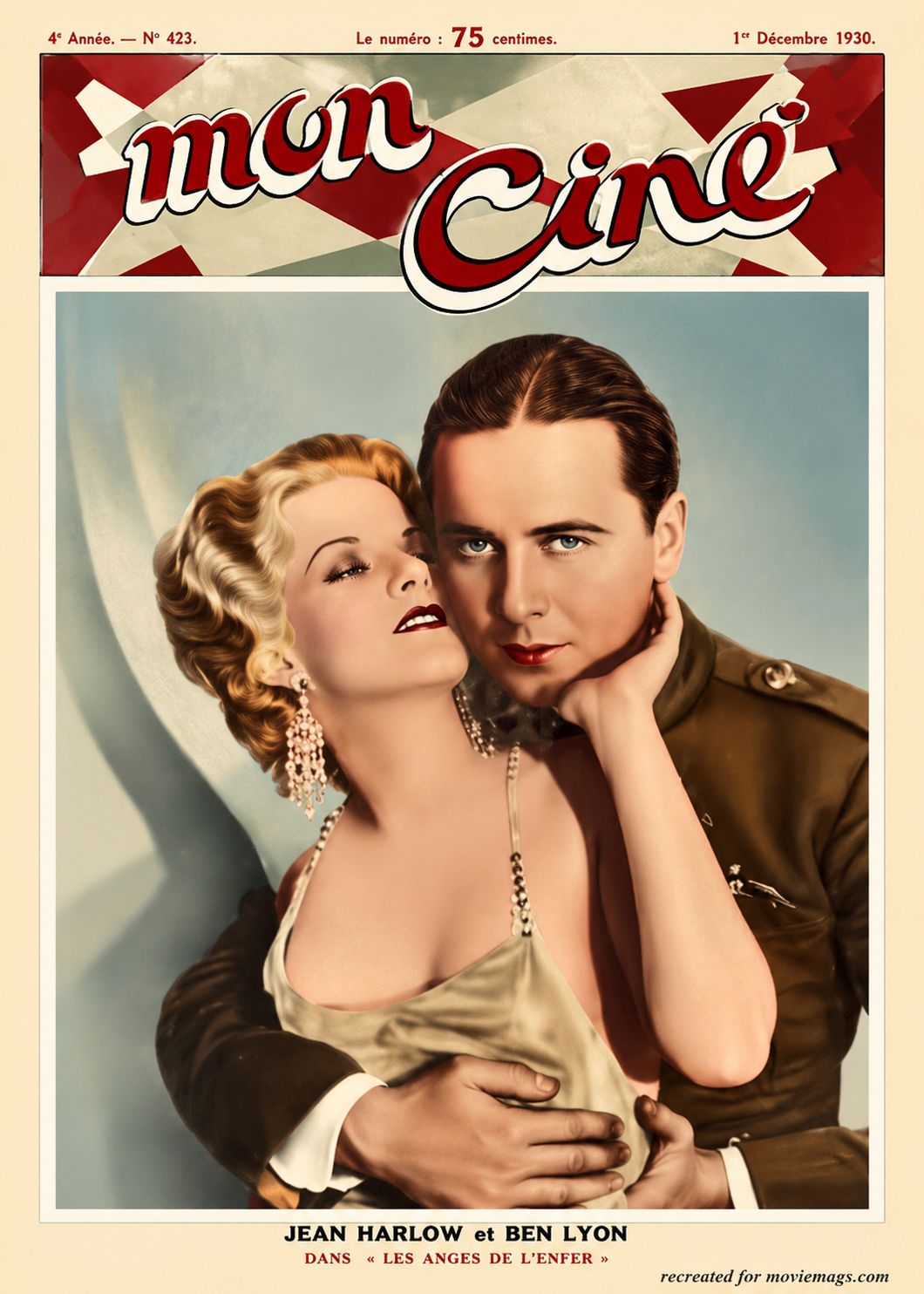
An earlier cover featuring Jean Harlow has surfaced from the French cinema magazine Mon Ciné (Issue No. 423), published on December 1, 1930.
The cover features Jean Harlow alongside Ben Lyon promoting the iconic aviation war film Hell’s Angels (Les Anges de l’Enfer in France). The movie marked the major breakout role for the 19-year-old Harlow, launching her career and establishing her as Hollywood’s legendary “Platinum Blonde” bombshell.
The cover features Jean Harlow alongside Ben Lyon promoting the iconic aviation war film Hell’s Angels (Les Anges de l’Enfer in France). The movie marked the major breakout role for the 19-year-old Harlow, launching her career and establishing her as Hollywood’s legendary “Platinum Blonde” bombshell.
Claudette Colbert: 1930s Top Star #22
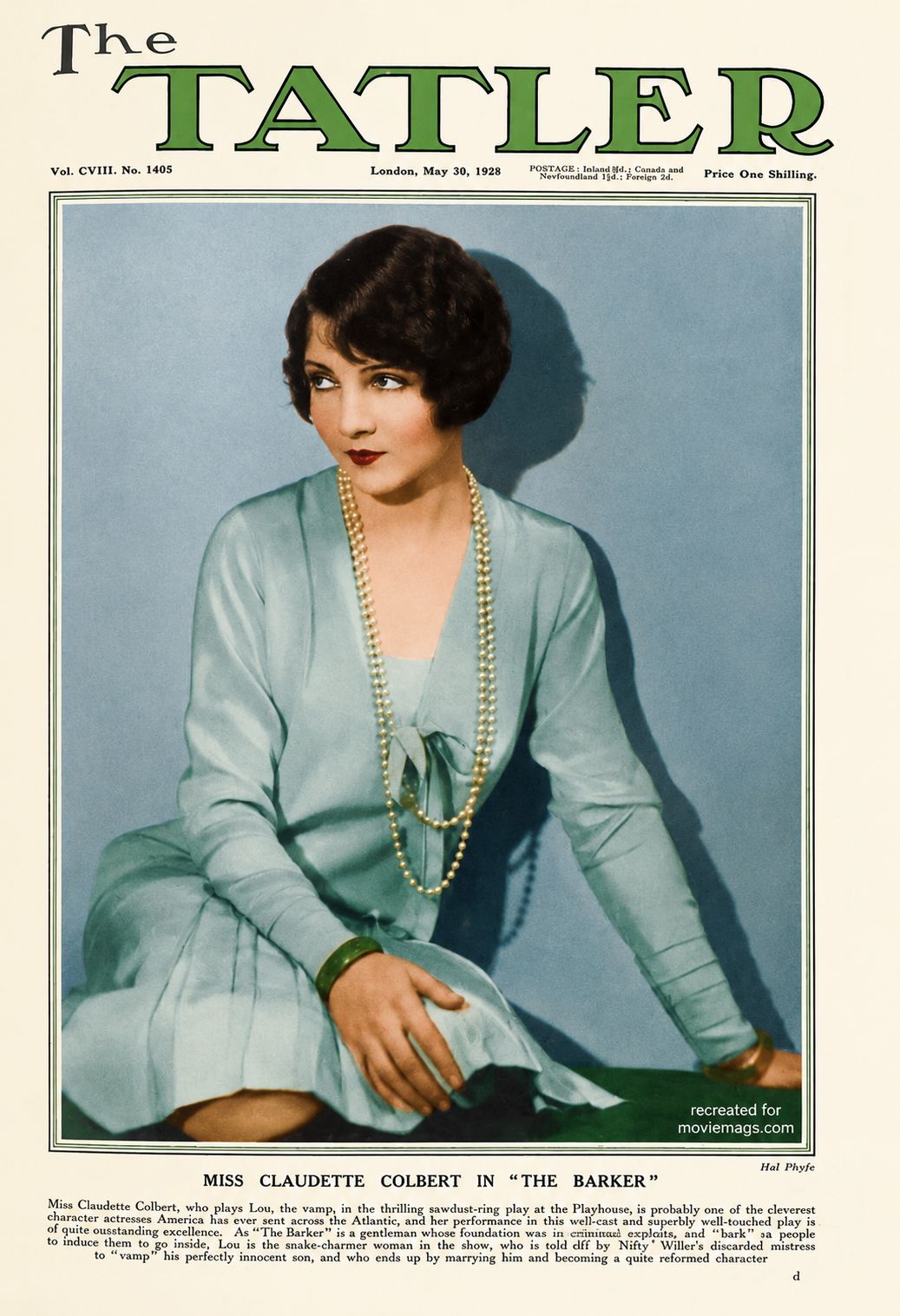
Born in France as Émilie Chauchoin, Claudette Colbert moved to New York with her family as a child and originally planned a career in fashion design. During the early 1920s, however, she became interested in acting and began appearing in Broadway productions. Her breakthrough on stage came in 1927 with the hit play The Barker, where she played a glamorous carnival performer opposite Walter Huston. The success of the production quickly attracted Hollywood’s attention.
This cover from *The Tatler* magazine (Vol. 108, No. 1405, May 30, 1928) is probably her first magazine cover.
This cover from *The Tatler* magazine (Vol. 108, No. 1405, May 30, 1928) is probably her first magazine cover.
Fredric March: 1930s Top Star #21
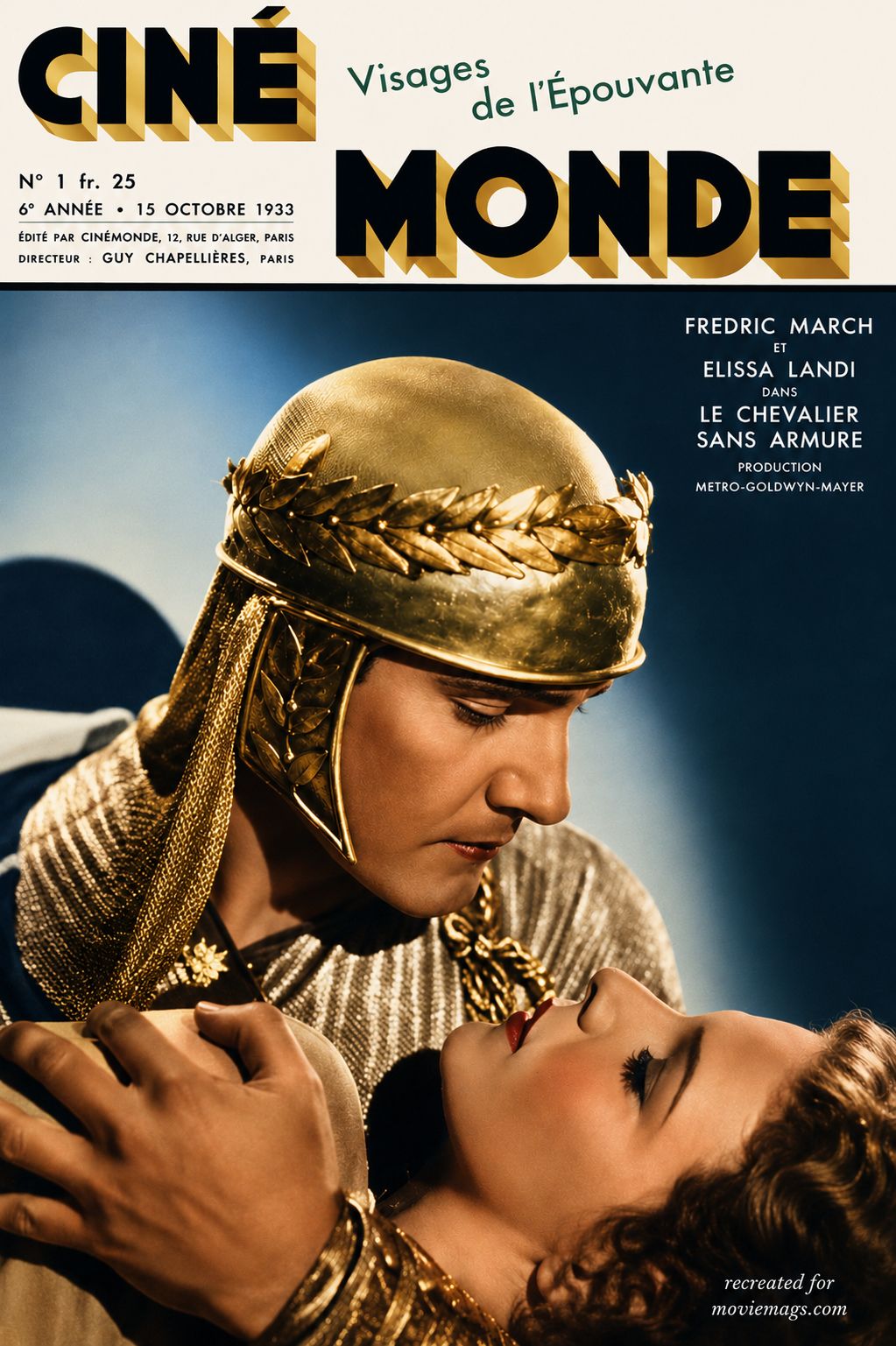
Fredric March won his first Best Actor Academy Award for Dr. Jekyll and Mr. Hyde in November 1932. Yet, his prominent debut on major fan magazine covers did not occur until 1933.
This two-year lag between his initial critical success in 1931 and his peak media visibility in 1933 stems from three specific industry factors:
1. The Horror Disconnect
March's 1931 breakthrough relied heavily on heavy prosthetics and a monstrous transformation. While the dual role proved his immense acting range, the grotesque appearance of Mr. Hyde did not align with the glamorous, romantic aesthetics required for mainstream magazine covers of the era.
2. Studio Control and Contract Constraints
Until 1933, March was under a strict, restrictive studio contract with Paramount Pictures. The studio system prioritized traditional romantic "matinee idols" like Clark Gable for front-page promotional real estate. March routinely pushed back against standard studio publicity machinery, preferring to retain control over his public image.
3. The 1933 Free Agency and Box Office Shift
The year 1933 marked a massive turning point for March: March chose not to renew his Paramount contract, transitioning into a rare freelance agent to handpick his roles.
Free from studio casting constraints, he immediately starred in highly lucrative, glamorous, and provocative hits like Ernst Lubitsch's Design for Living (1933).
By trading his monster makeup for high-society romantic comedies alongside co-stars like Claudette Colbert and Gary Cooper, March finally achieved the mainstream commercial appeal that magazine editors demanded.
This two-year lag between his initial critical success in 1931 and his peak media visibility in 1933 stems from three specific industry factors:
1. The Horror Disconnect
March's 1931 breakthrough relied heavily on heavy prosthetics and a monstrous transformation. While the dual role proved his immense acting range, the grotesque appearance of Mr. Hyde did not align with the glamorous, romantic aesthetics required for mainstream magazine covers of the era.
2. Studio Control and Contract Constraints
Until 1933, March was under a strict, restrictive studio contract with Paramount Pictures. The studio system prioritized traditional romantic "matinee idols" like Clark Gable for front-page promotional real estate. March routinely pushed back against standard studio publicity machinery, preferring to retain control over his public image.
3. The 1933 Free Agency and Box Office Shift
The year 1933 marked a massive turning point for March: March chose not to renew his Paramount contract, transitioning into a rare freelance agent to handpick his roles.
Free from studio casting constraints, he immediately starred in highly lucrative, glamorous, and provocative hits like Ernst Lubitsch's Design for Living (1933).
By trading his monster makeup for high-society romantic comedies alongside co-stars like Claudette Colbert and Gary Cooper, March finally achieved the mainstream commercial appeal that magazine editors demanded.
Wallace Beery 1930s Top Star #20
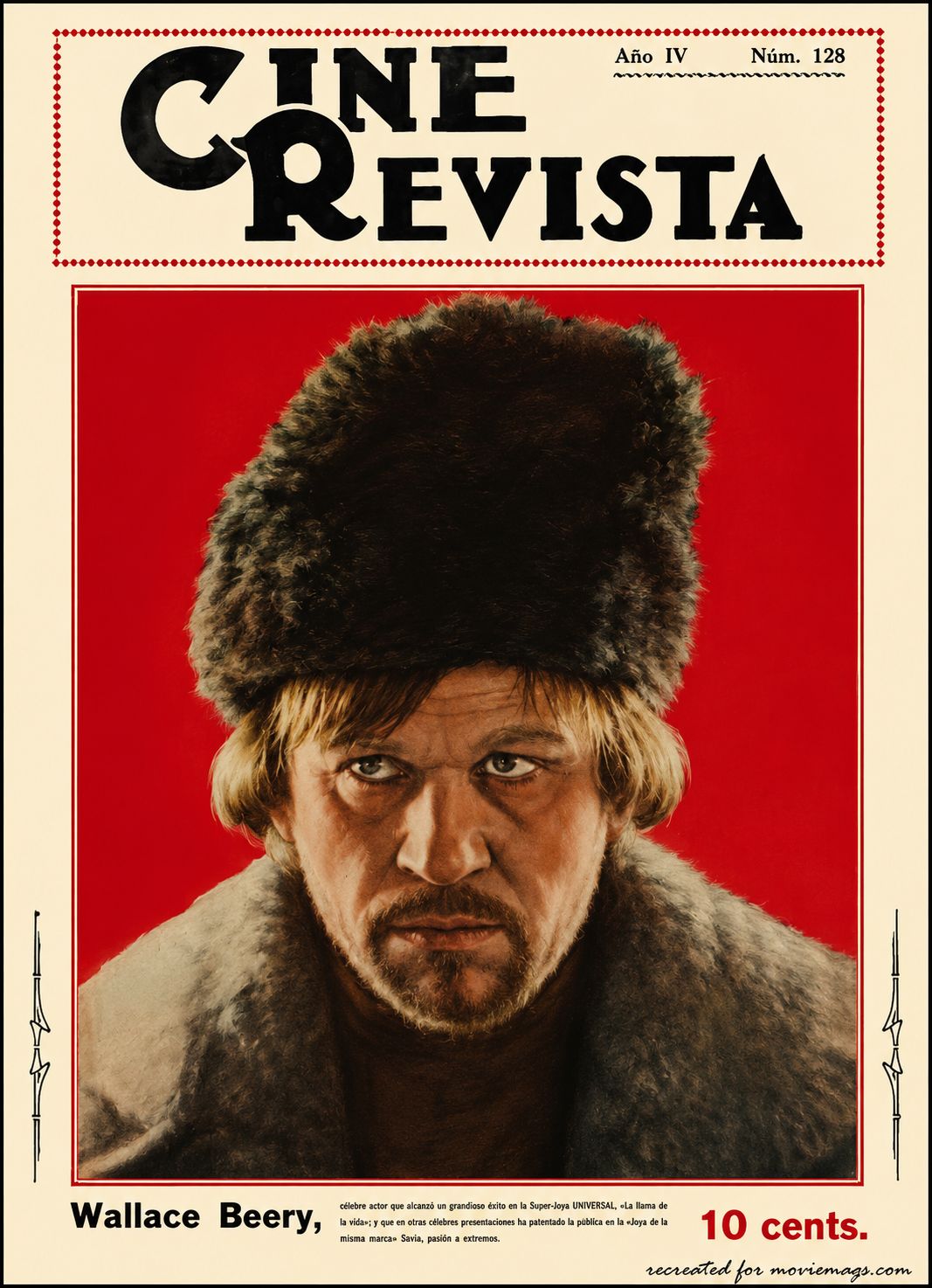
Wallace Beery was one of the biggest and most recognizable stars of early Hollywood, famous for playing rough, tough, larger-than-life characters with a surprising emotional warmth underneath. With his heavy build, gruff voice, broken nose, and intimidating presence, he became the archetype of the lovable brute during the 1920s and 1930s.
His real superstardom arrived after the transition to sound films.
His greatest success came with The Champ (1931), where he played a washed-up alcoholic boxer trying to care for his young son. The emotional performance earned him the Academy Award for Best Actor and transformed him into one of MGM’s highest-paid stars.
His real superstardom arrived after the transition to sound films.
His greatest success came with The Champ (1931), where he played a washed-up alcoholic boxer trying to care for his young son. The emotional performance earned him the Academy Award for Best Actor and transformed him into one of MGM’s highest-paid stars.
Marlene Dietrich 1930s Top Star #19
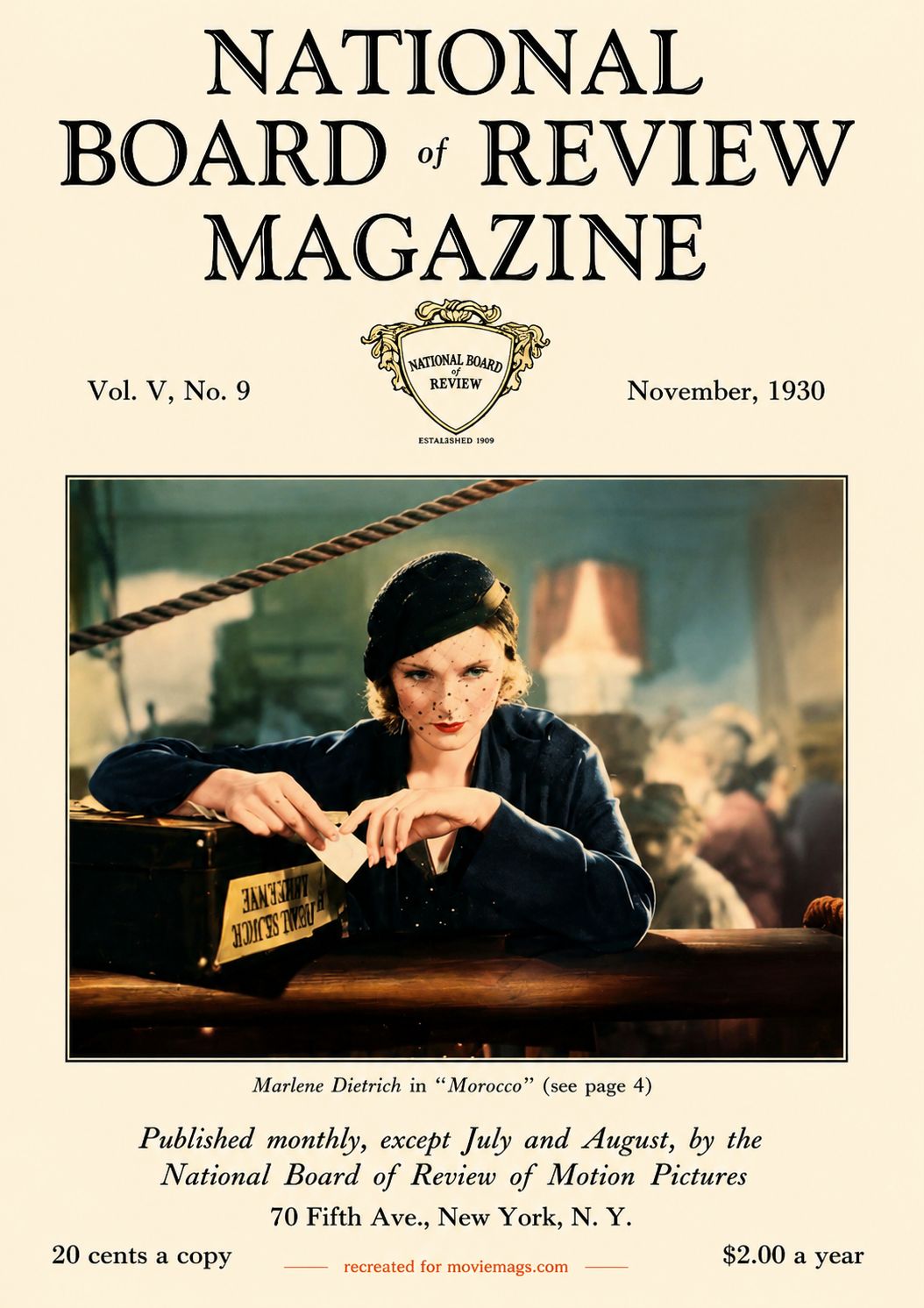
This recreated cover is inspired by the November 1930 issue of the National Board of Review Magazine (Vol. V, No. 9), a publication issued by the National Board of Review of Motion Pictures in New York City. Founded in 1909, the organization championed cinema as an art form and opposed government film censorship, encouraging audiences to appreciate quality filmmaking through criticism and education.
The featured image captures Marlene Dietrich in her landmark American breakthrough film Morocco, directed by Josef von Sternberg and co-starring Gary Cooper.
The featured image captures Marlene Dietrich in her landmark American breakthrough film Morocco, directed by Josef von Sternberg and co-starring Gary Cooper.
Myrna Loy update
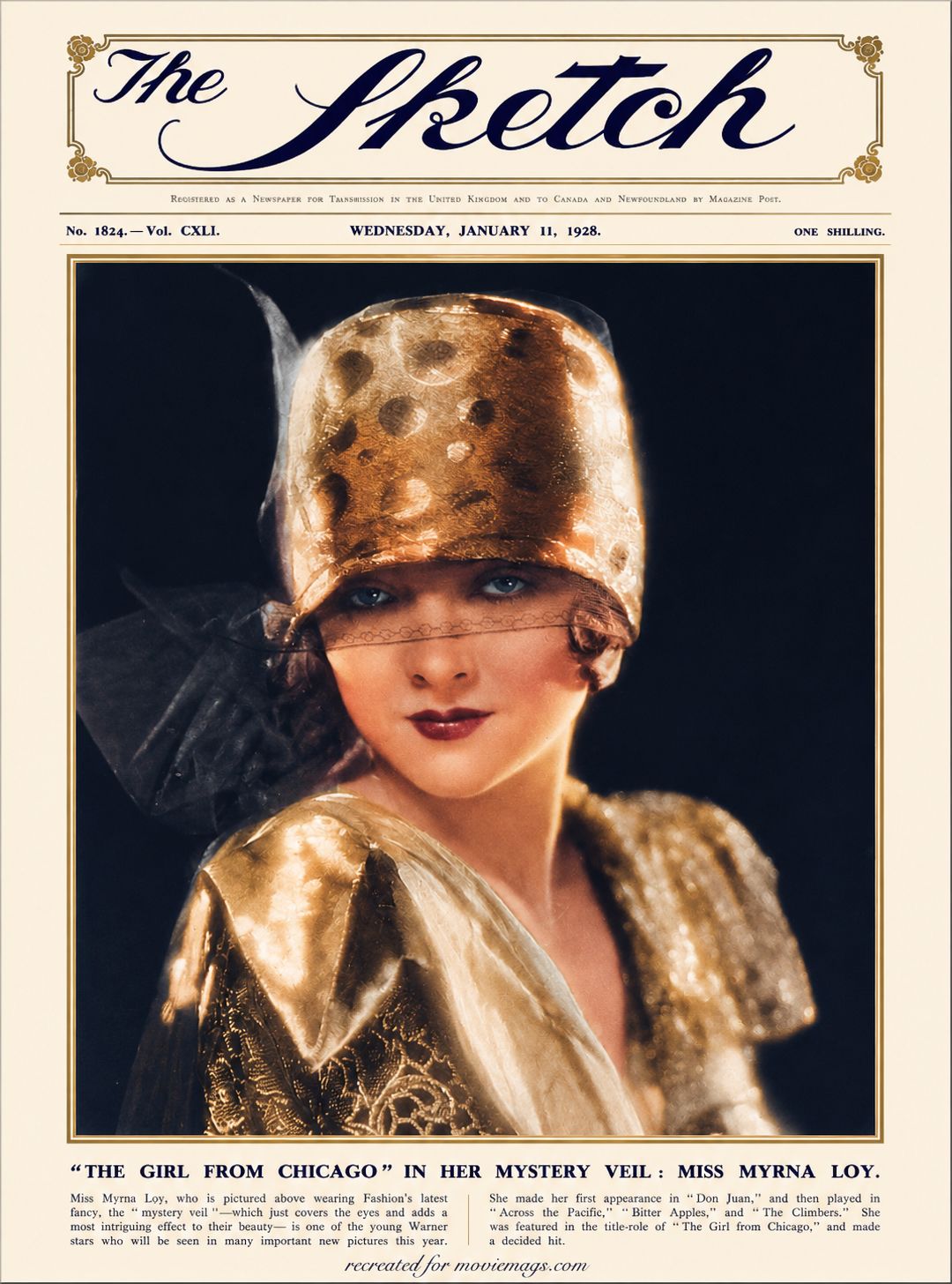
A newly surfaced cover featuring Myrna Loy has been identified from the British magazine The Sketch, published on January 11, 1928. The striking cover presents Loy behind a mysterious veil under the headline: “The Girl From Chicago” In Her Mystery Veil: Miss Myrna Loy.
The image was created as promotional material for Loy’s role as Mary Carlton in the 1927 silent crime-drama The Girl from Chicago. At the time, Myrna Loy was still early in her career and was frequently cast in exotic or enigmatic roles, a screen image reflected perfectly in this atmospheric portrait.
The image was created as promotional material for Loy’s role as Mary Carlton in the 1927 silent crime-drama The Girl from Chicago. At the time, Myrna Loy was still early in her career and was frequently cast in exotic or enigmatic roles, a screen image reflected perfectly in this atmospheric portrait.
William Powell: 1930s Top Star #18
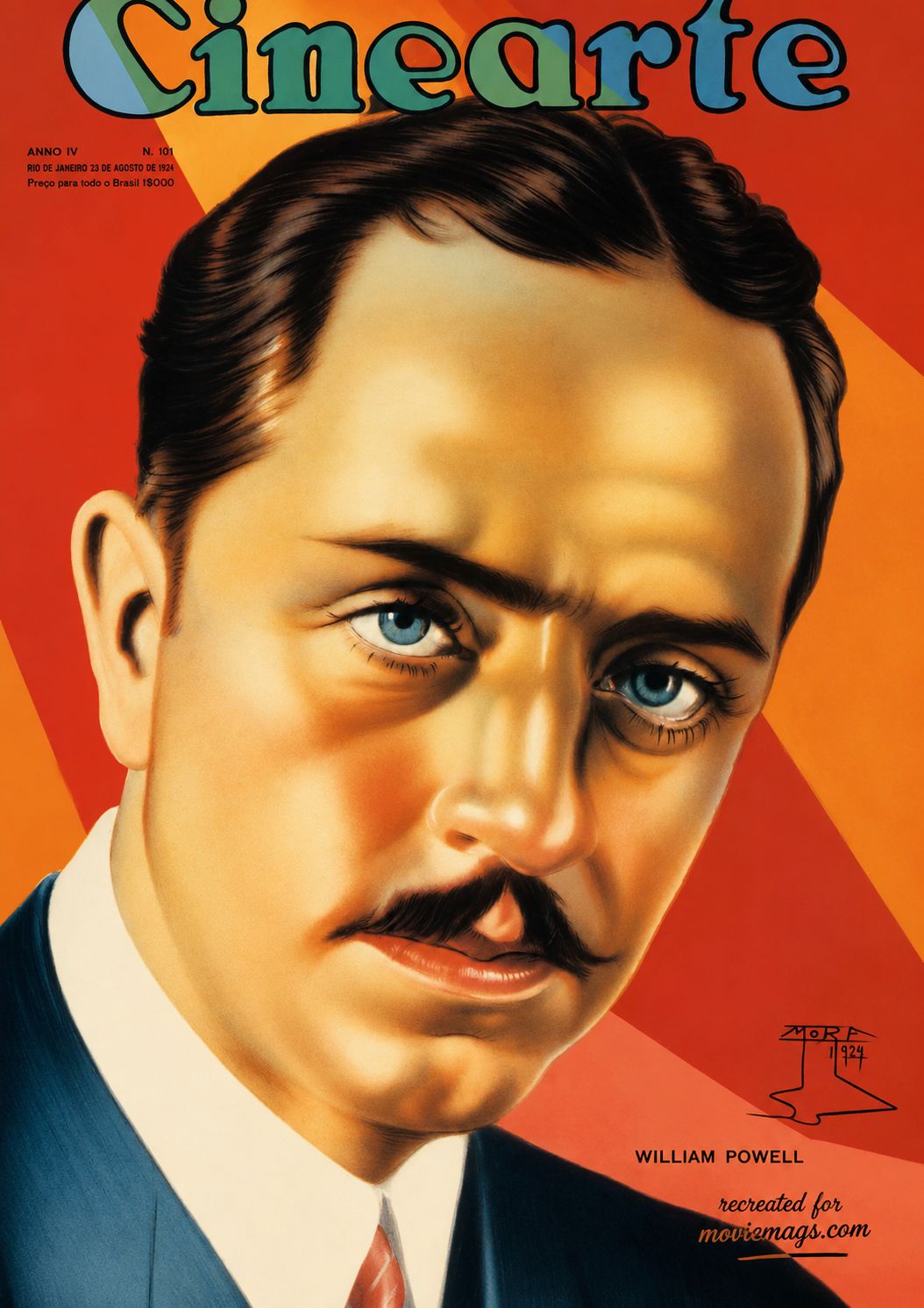
Publicity images of William Powell perfectly captured the refined sophistication that made him one of Hollywood’s most distinguished leading men.
Unlike many stars of the 1930s who relied on dramatic glamour or rugged masculinity, Powell projected intelligence, wit, and effortless elegance.
Studio portraits often emphasized his carefully groomed mustache, calm gaze, and impeccable formal attire, presenting him as the ideal gentleman of the Golden Age.
Unlike many stars of the 1930s who relied on dramatic glamour or rugged masculinity, Powell projected intelligence, wit, and effortless elegance.
Studio portraits often emphasized his carefully groomed mustache, calm gaze, and impeccable formal attire, presenting him as the ideal gentleman of the Golden Age.
Mickey Rooney: 1930s Top Star #17

Mickey Rooney was one of the most successful and recognizable stars of Hollywood’s Golden Age.
Beginning his career as a child actor in silent films, Rooney became MGM’s top box-office attraction in the late 1930s and early 1940s.
He was especially famous for the “Andy Hardy” film series, which portrayed idealized American teenage life and made him a symbol of youthful optimism during the Depression era.
Beginning his career as a child actor in silent films, Rooney became MGM’s top box-office attraction in the late 1930s and early 1940s.
He was especially famous for the “Andy Hardy” film series, which portrayed idealized American teenage life and made him a symbol of youthful optimism during the Depression era.
Ginger Rogers: 1930s Top Star #16
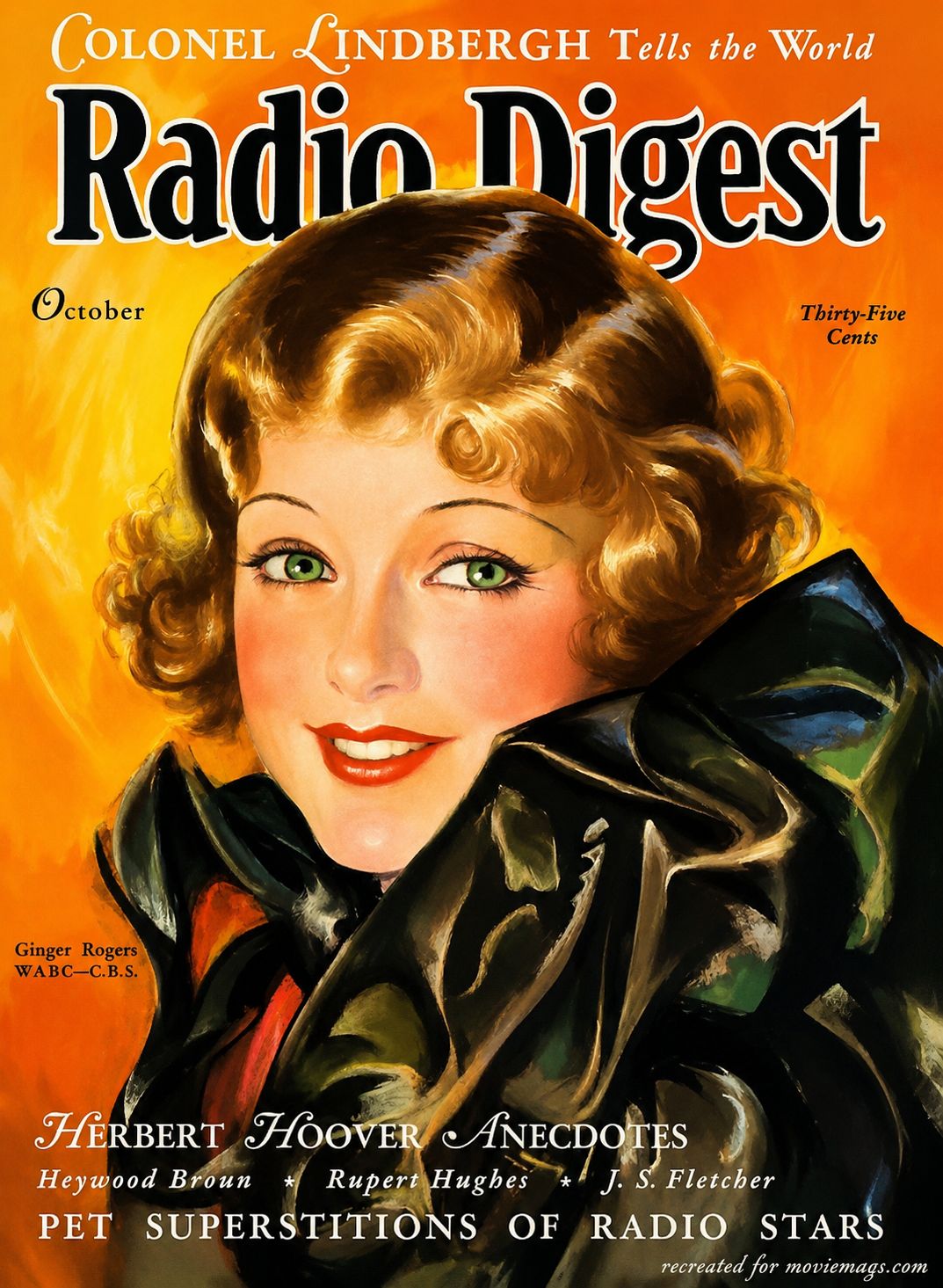
The October 1930 issue of Radio Digest is one of the earliest magazine covers to feature Ginger Rogers.
The magazine was published during a pivotal year in her career when she was transitioning from a Broadway star in Girl Crazy and Top Speed to a Hollywood actress.
The magazine was published during a pivotal year in her career when she was transitioning from a Broadway star in Girl Crazy and Top Speed to a Hollywood actress.
Cary Grant: 1930s Top Star #15
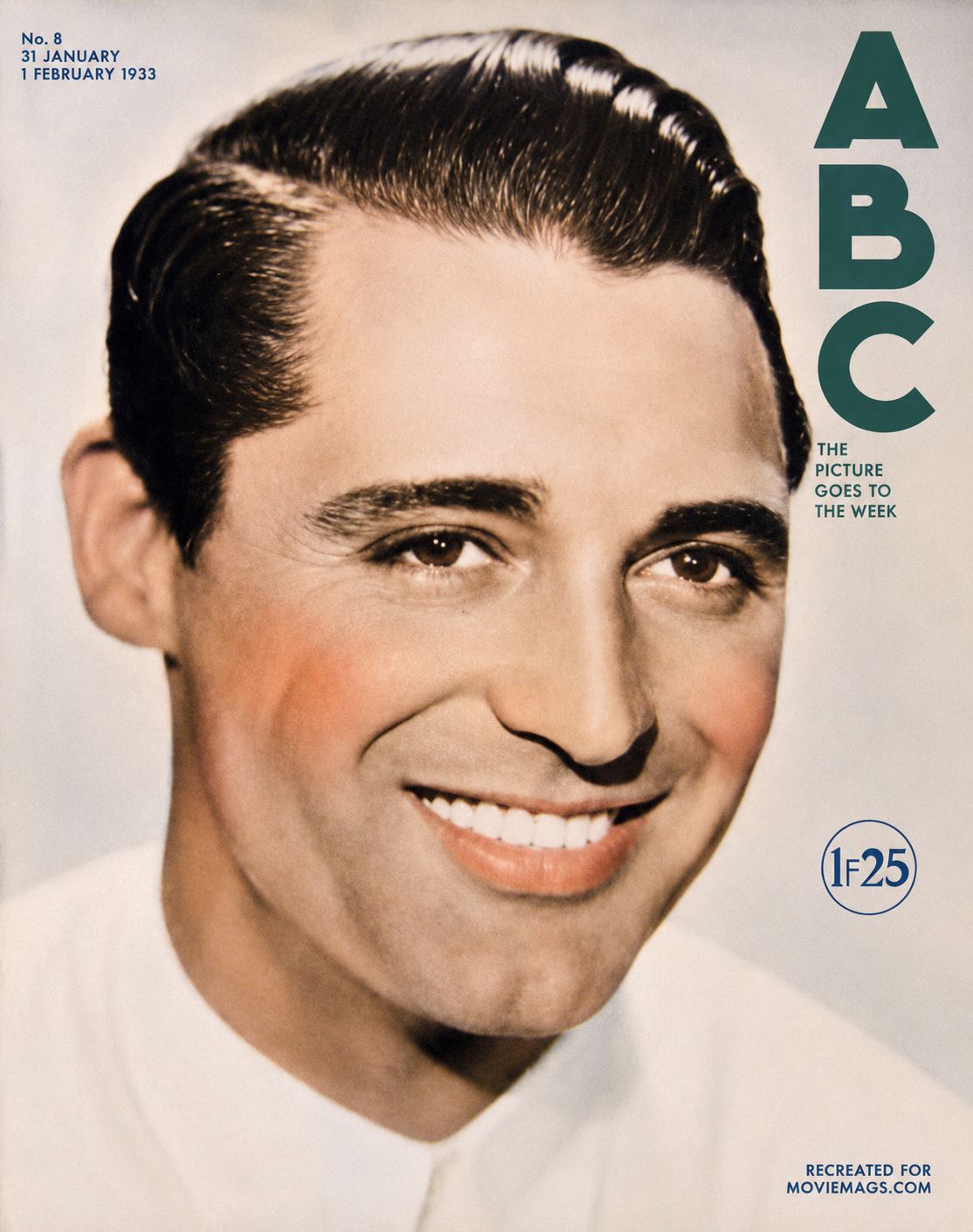
This 1933 issue of ABC Geïllustreerd Weekblad may represent the earliest known magazine cover appearance of Cary Grant, published shortly before he became one of Hollywood’s biggest stars. At the time, Grant was still at the beginning of his film career and had not yet achieved international fame.
ABC Geïllustreerd Weekblad was a Dutch-language socialist family magazine published in Belgium during the 1930s. The large-format weekly combined cinema coverage, glamour photography, popular culture, and social commentary with a progressive political tone aimed at working-class readers.
ABC Geïllustreerd Weekblad was a Dutch-language socialist family magazine published in Belgium during the 1930s. The large-format weekly combined cinema coverage, glamour photography, popular culture, and social commentary with a progressive political tone aimed at working-class readers.
Errol Flynn update.
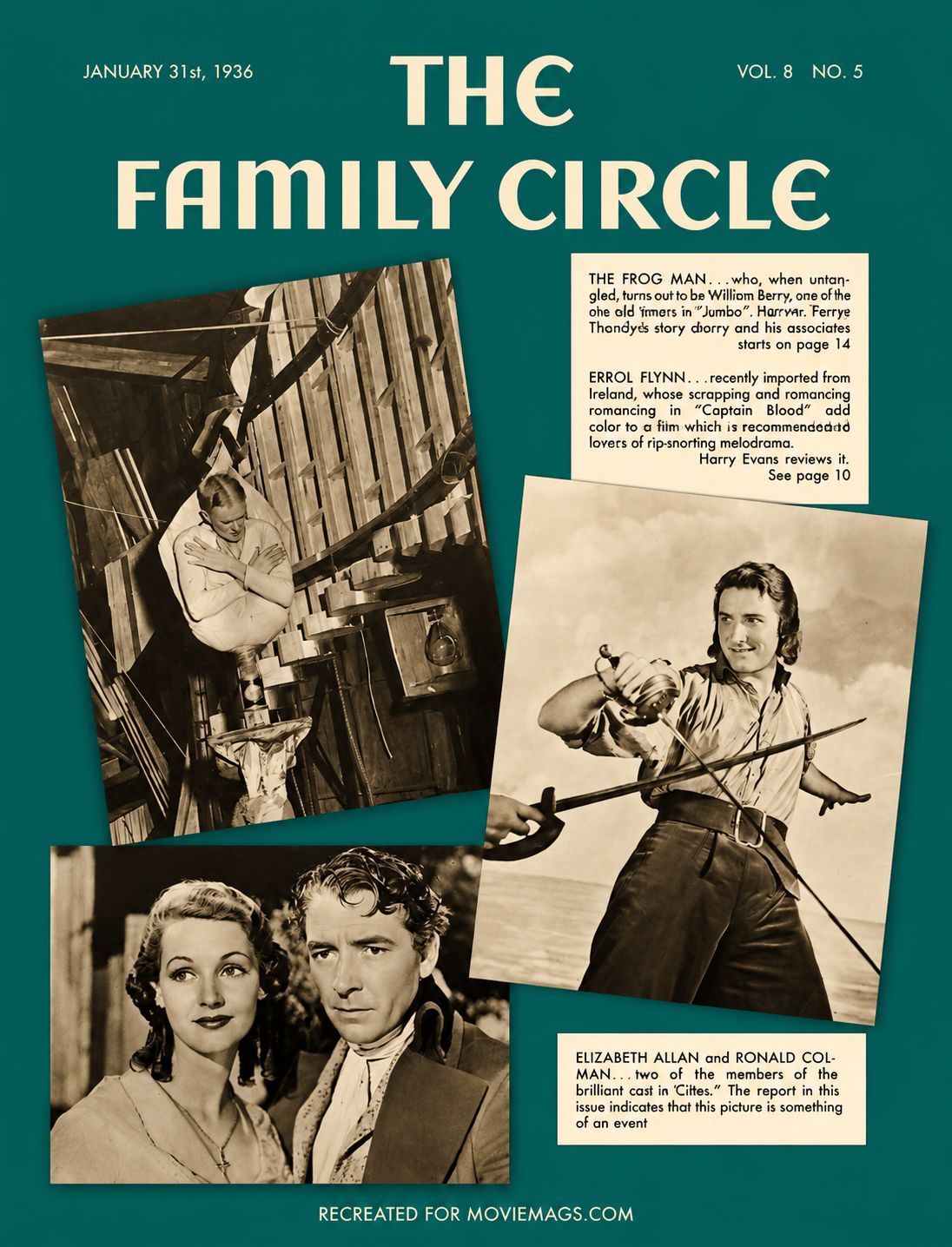
An even earlier “first cover” has now been identified.
This is the January 31, 1936 issue of *The Family Circle* (Vol. 8, No. 5), a popular weekly magazine of the era that was commonly sold through grocery stores.
Featured on the cover is Errol Flynn in a classic swashbuckling pose from his breakthrough film *Captain Blood* (released in late 1935). The accompanying text promotes him as “recently imported from Ireland,” a typical studio publicity angle of the time, and highlights the film’s adventurous mix of swordplay and romance.
This is the January 31, 1936 issue of *The Family Circle* (Vol. 8, No. 5), a popular weekly magazine of the era that was commonly sold through grocery stores.
Featured on the cover is Errol Flynn in a classic swashbuckling pose from his breakthrough film *Captain Blood* (released in late 1935). The accompanying text promotes him as “recently imported from Ireland,” a typical studio publicity angle of the time, and highlights the film’s adventurous mix of swordplay and romance.
Errol Flynn: 1930s Top Star #14

One of the earliest known Errol Flynn magazine covers appeared in Film Pictorial Weekly, a British film magazine, on January 2, 1937. The cover showcased Flynn alongside Olivia de Havilland in a promotional image from their 1936 film The Charge of the Light Brigade. It marked the second of the eight iconic screen collaborations that made the duo one of Hollywood’s most celebrated partnerships.
Mae West 1930s Top Star #13
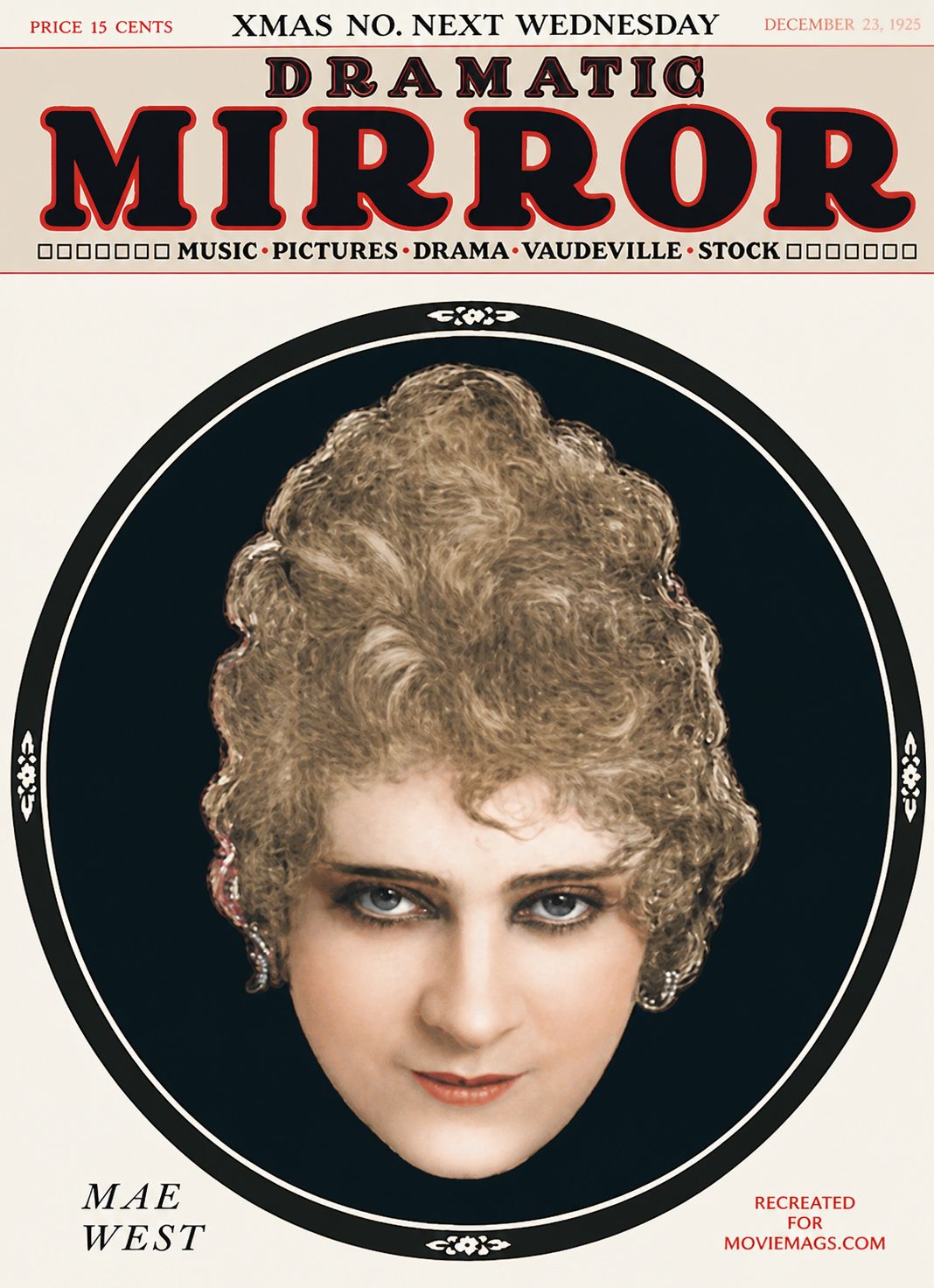
Mae West didn’t arrive in Hollywood as a newcomer - she arrived as a fully formed, battle-tested star.
Before film, she built her reputation in vaudeville and on Broadway through the 1910s–1920s, writing, producing, and starring in her own material. That alone set her apart: West controlled her image and voice at a time when most performers did not. Her shows leaned into bold sexuality, double entendres, and a confident female persona that challenged social norms.
By the early 1930s, Hollywood was struggling during the Great Depression and looking for proven names who could draw audiences. West, already a household name from the stage, was a perfect fit - even if she was nearly 40 when she signed with Paramount Pictures in 1932.
Before film, she built her reputation in vaudeville and on Broadway through the 1910s–1920s, writing, producing, and starring in her own material. That alone set her apart: West controlled her image and voice at a time when most performers did not. Her shows leaned into bold sexuality, double entendres, and a confident female persona that challenged social norms.
By the early 1930s, Hollywood was struggling during the Great Depression and looking for proven names who could draw audiences. West, already a household name from the stage, was a perfect fit - even if she was nearly 40 when she signed with Paramount Pictures in 1932.
Spencer Tracy: 1930s Top Star #12
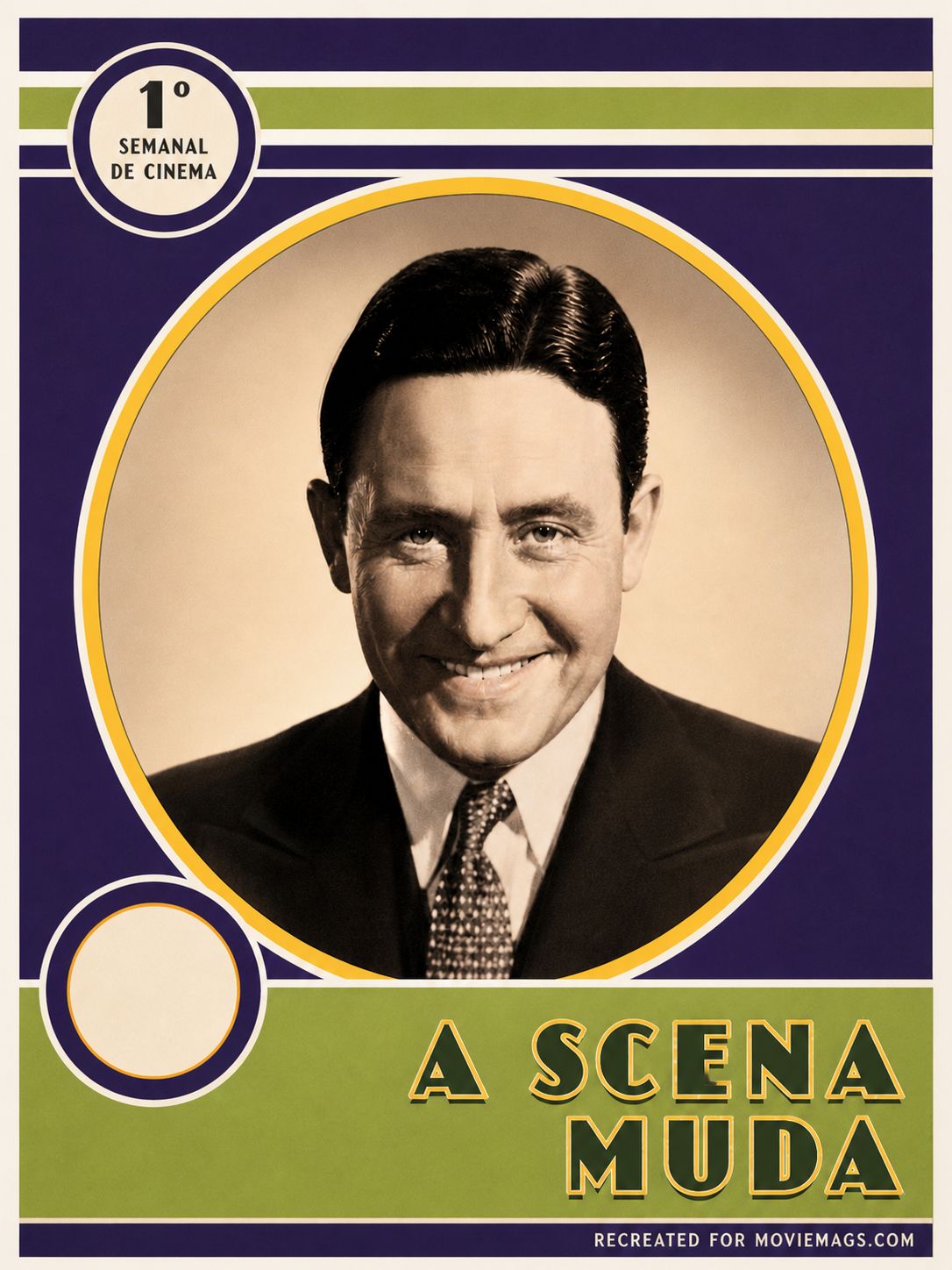
RKO promoted Katharine Hepburn as a striking, modern figure well suited to magazine covers, whereas Spencer Tracy appeared less frequently in such features during the 1930s.
Studios tended to emphasize his reputation as a rugged, dedicated actor rather than a conventional screen idol.
His first known appearance on a cover likely occurred in 1933, when he was featured on issue #648 of the Brazilian magazine A Scena Muda.
Studios tended to emphasize his reputation as a rugged, dedicated actor rather than a conventional screen idol.
His first known appearance on a cover likely occurred in 1933, when he was featured on issue #648 of the Brazilian magazine A Scena Muda.
Katharine Hepburn: 1930s #11 Top Star

Following her Oscar-winning performance in Morning Glory (1933), Katharine Hepburn’s fame exploded, leading to a surge of media attention.
Her role in Morning Glory transformed her into an "overnight" sensation.
Major U.S. fan magazines, such as Photoplay and Motion Picture Magazine, immediately rushed to feature her as a "dynamic new screen personality" in early 1933.
Picturegoer, January 1933, is among her earliest known covers, very possibly the first.
Her role in Morning Glory transformed her into an "overnight" sensation.
Major U.S. fan magazines, such as Photoplay and Motion Picture Magazine, immediately rushed to feature her as a "dynamic new screen personality" in early 1933.
Picturegoer, January 1933, is among her earliest known covers, very possibly the first.
Fred Astaire 1930s Top Stars #10

This cover of The Stage magazine (November 1932) features a portrait of Fred Astaire, illustrated by Martha Sawyers, known for her theatrical art.
It captures Astaire at a turning point, as he was about to star in Gay Divorce, a Cole Porter musical that opened on Broadway that same month. The show introduced the classic song “Night and Day.”
This period marked Astaire’s transition to a solo career after his sister Adele retired. It was also his final Broadway appearance before moving to Hollywood, where he signed with RKO and began his famous partnership with Ginger Rogers.
It captures Astaire at a turning point, as he was about to star in Gay Divorce, a Cole Porter musical that opened on Broadway that same month. The show introduced the classic song “Night and Day.”
This period marked Astaire’s transition to a solo career after his sister Adele retired. It was also his final Broadway appearance before moving to Hollywood, where he signed with RKO and began his famous partnership with Ginger Rogers.
Jean Harlow: 1930s Top Star first cover
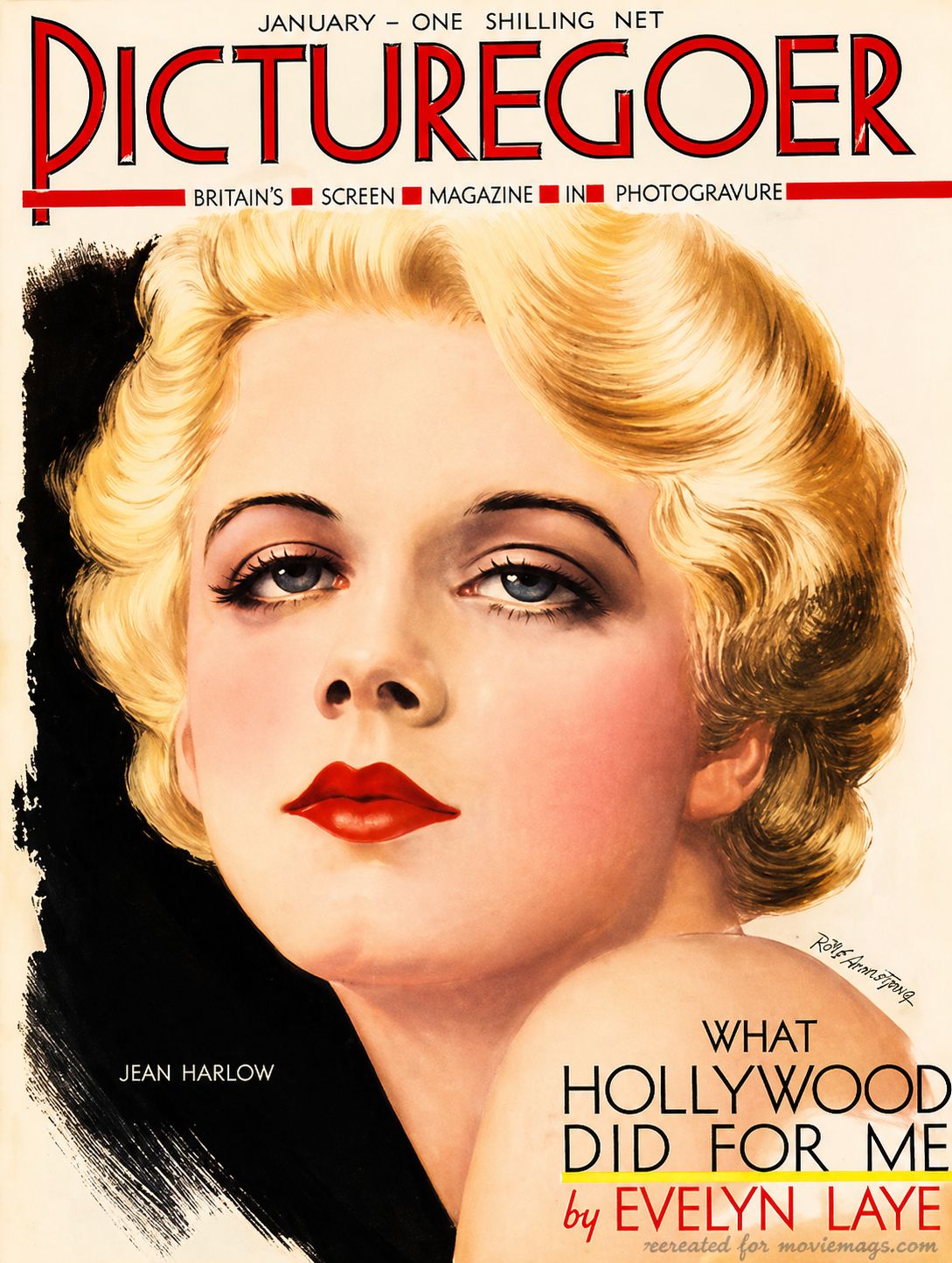
Jean Harlow’s first known magazine cover is believed to be the January 1931 issue of the British Picturegoer.
On May 3, 1937, she made history as the first film actress to appear on the cover of Life magazine.
The issue reached newsstands just one month before her sudden death at the age of 26.
On May 3, 1937, she made history as the first film actress to appear on the cover of Life magazine.
The issue reached newsstands just one month before her sudden death at the age of 26.
More Pictures
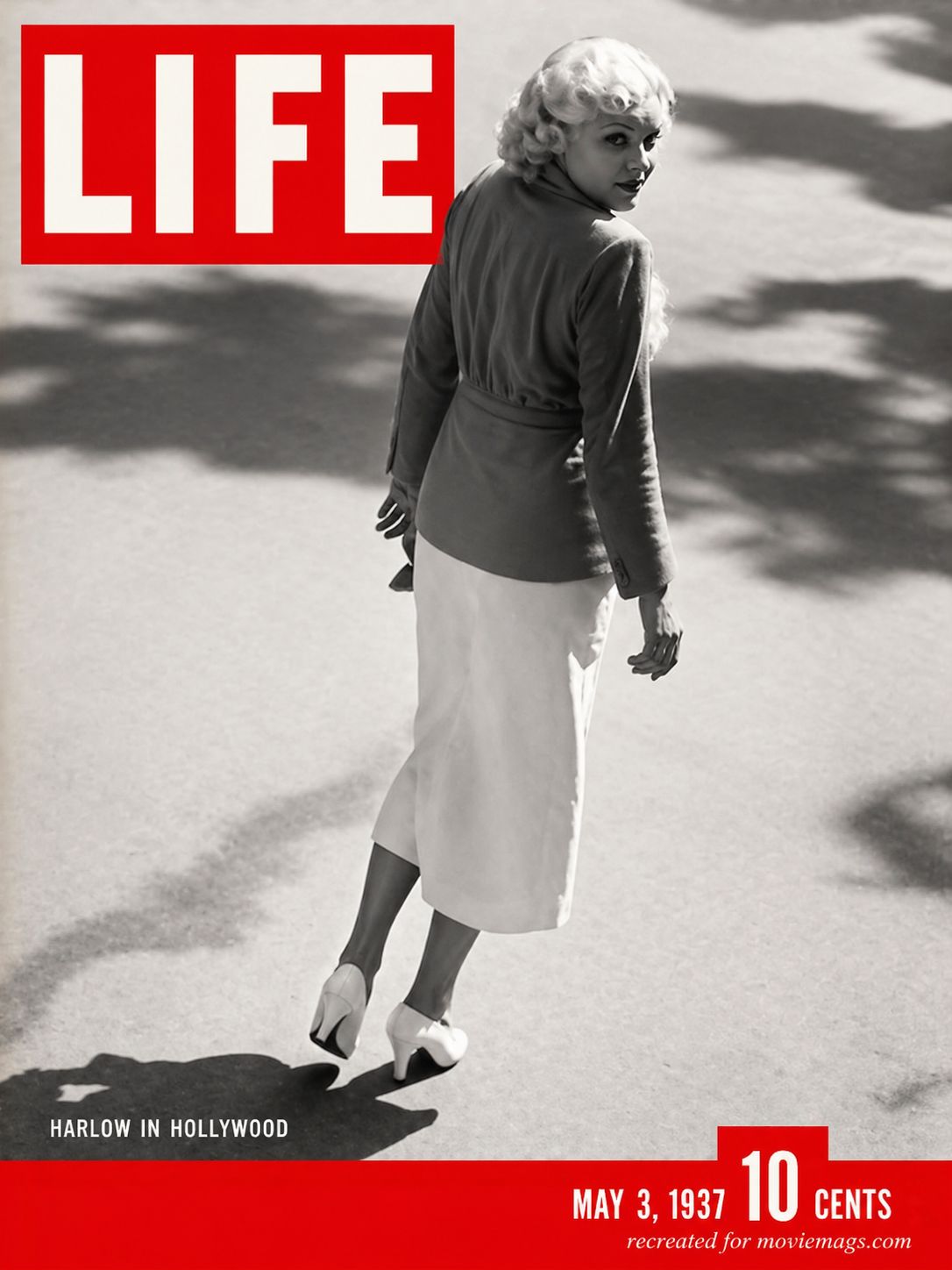
Life Magazine 1937
Gary Cooper 1930s Top Star #8
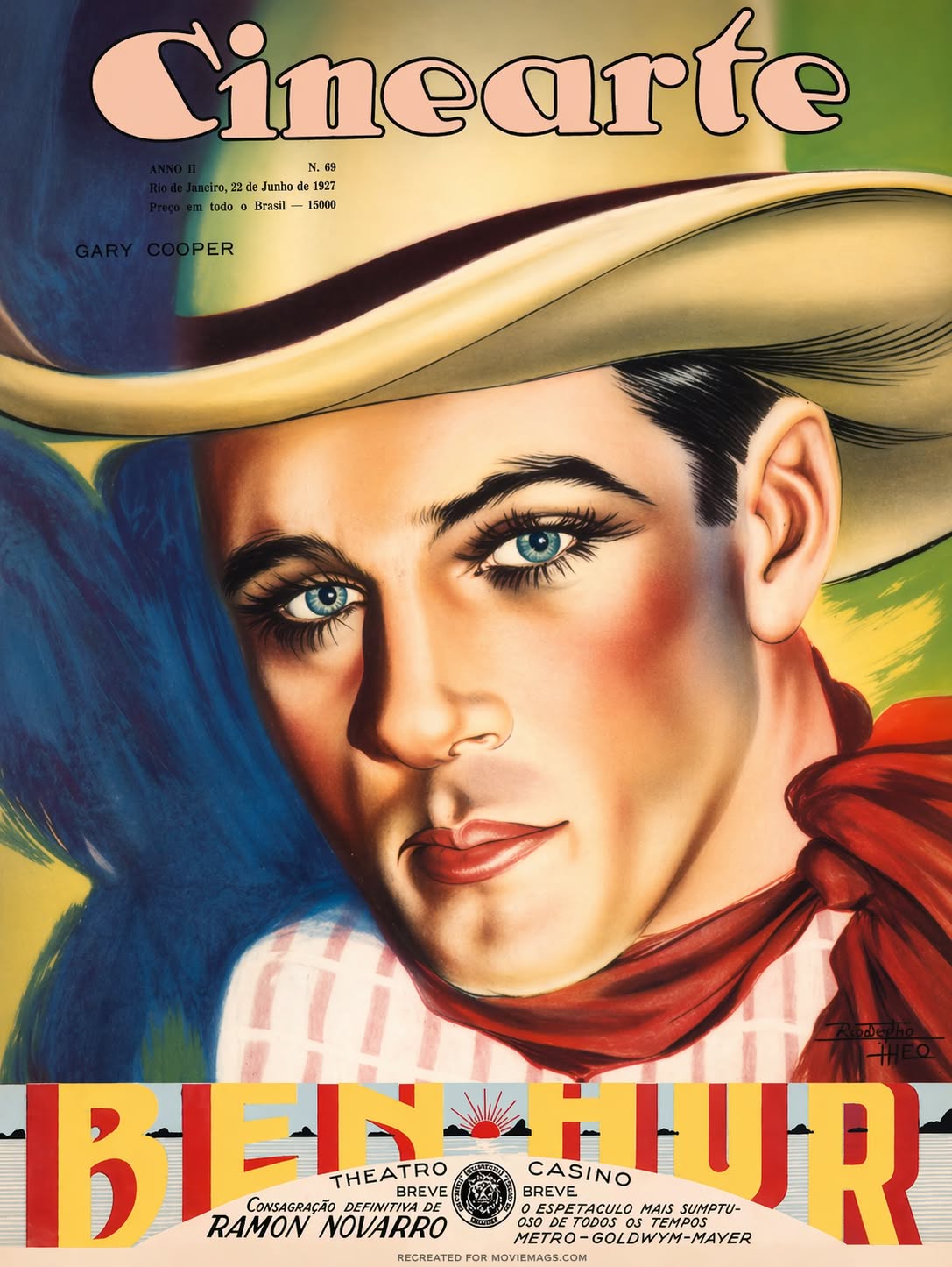
Gary Cooper had long lashes and expressive eyes.
In the 1920s, actors-both men and women-relied heavily on facial expression to convey emotion, especially in the silent era. To enhance this, eye makeup was often applied quite heavily.
On this, probably one of Cooper’s earliest covers-of the Brazilian magazine Cinearte from 1927-the illustrator went even further, exaggerating his striking blue eyes and long lashes to create a more glamorous, "larger-than-life" image.
In the 1920s, actors-both men and women-relied heavily on facial expression to convey emotion, especially in the silent era. To enhance this, eye makeup was often applied quite heavily.
On this, probably one of Cooper’s earliest covers-of the Brazilian magazine Cinearte from 1927-the illustrator went even further, exaggerating his striking blue eyes and long lashes to create a more glamorous, "larger-than-life" image.
Myrna Loy

Myrna Loy rose from silent-era typecasting to become one of Hollywood’s most beloved and enduring stars, known for her sharp wit and sophisticated charm.
Some believe that a 1928 issue of the Spanish magazine *Popular Film* depicts Loy. However, that cover cannot be reliably identified as her.
Her first appearance on a major magazine cover is often cited as the March 1929 issue of *Screenland*. That cover, however, is a painted portrait and bears little resemblance to Loy.
Some believe that a 1928 issue of the Spanish magazine *Popular Film* depicts Loy. However, that cover cannot be reliably identified as her.
Her first appearance on a major magazine cover is often cited as the March 1929 issue of *Screenland*. That cover, however, is a painted portrait and bears little resemblance to Loy.
More Pictures
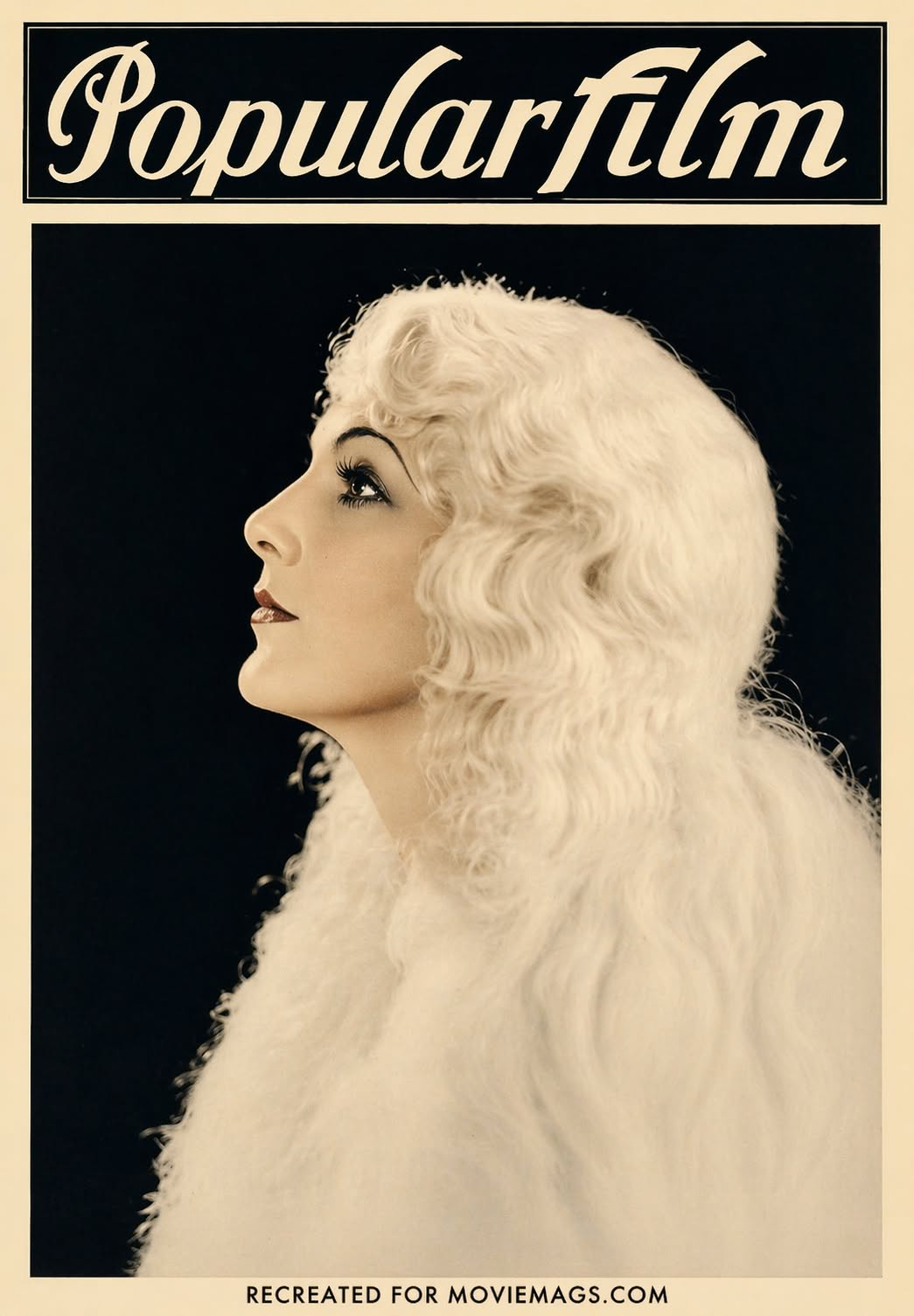
Popular Film, 1928
Bette Davis 30s Top Star #6
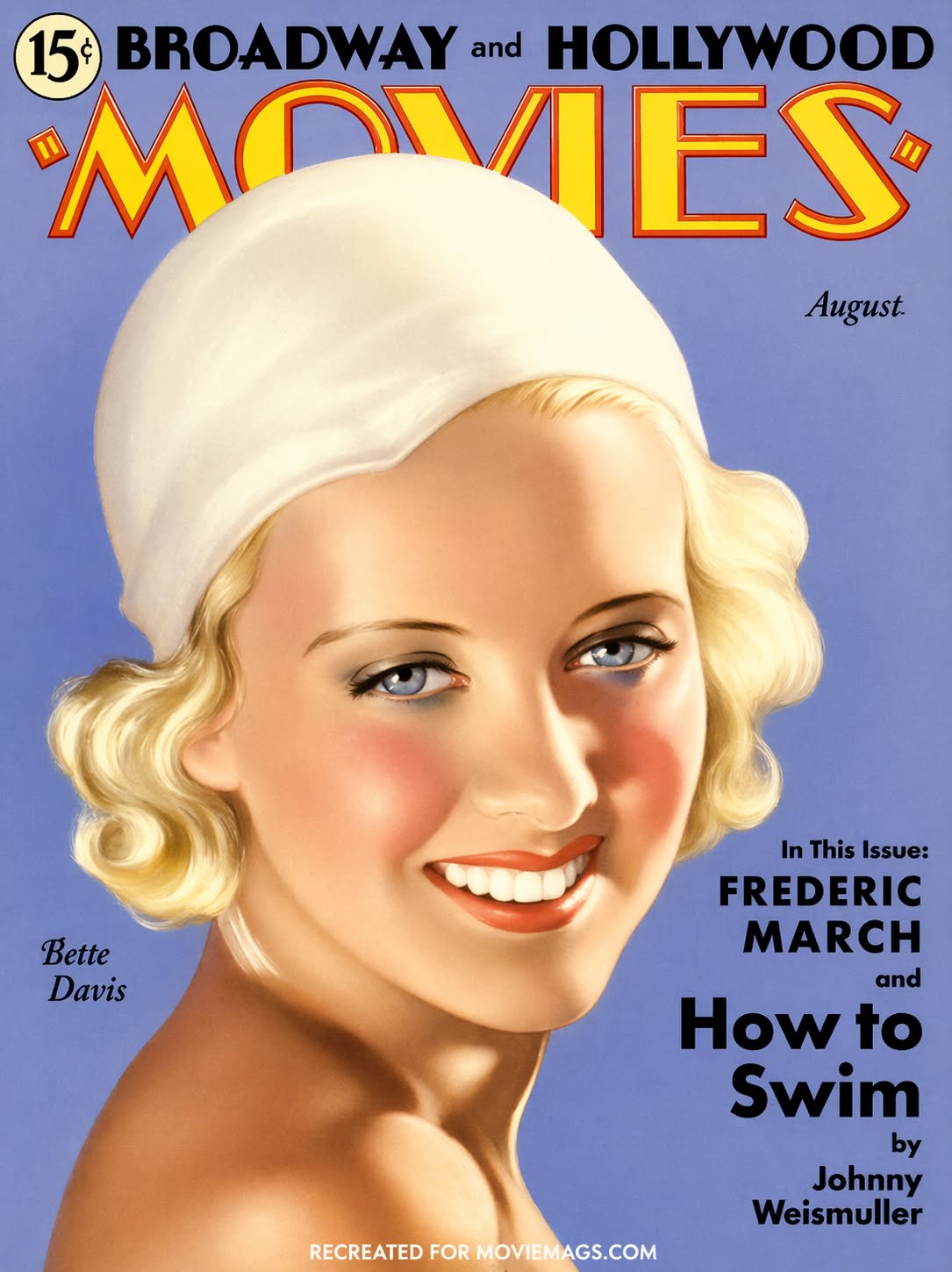
Unlike James Cagney, Bette Davis did not become an immediate star. Her rise was gradual, developing between 1932 and 1934, before her breakthrough in Of Human Bondage.
As a result, early magazine covers (particularly before 1933) are rare and often poorly documented.
This issue of Movies, published by Alavania Publications, Inc., is a strong candidate for one of her earliest known cover appearances.
As a result, early magazine covers (particularly before 1933) are rare and often poorly documented.
This issue of Movies, published by Alavania Publications, Inc., is a strong candidate for one of her earliest known cover appearances.
James Cagney Top 1930s Star #5
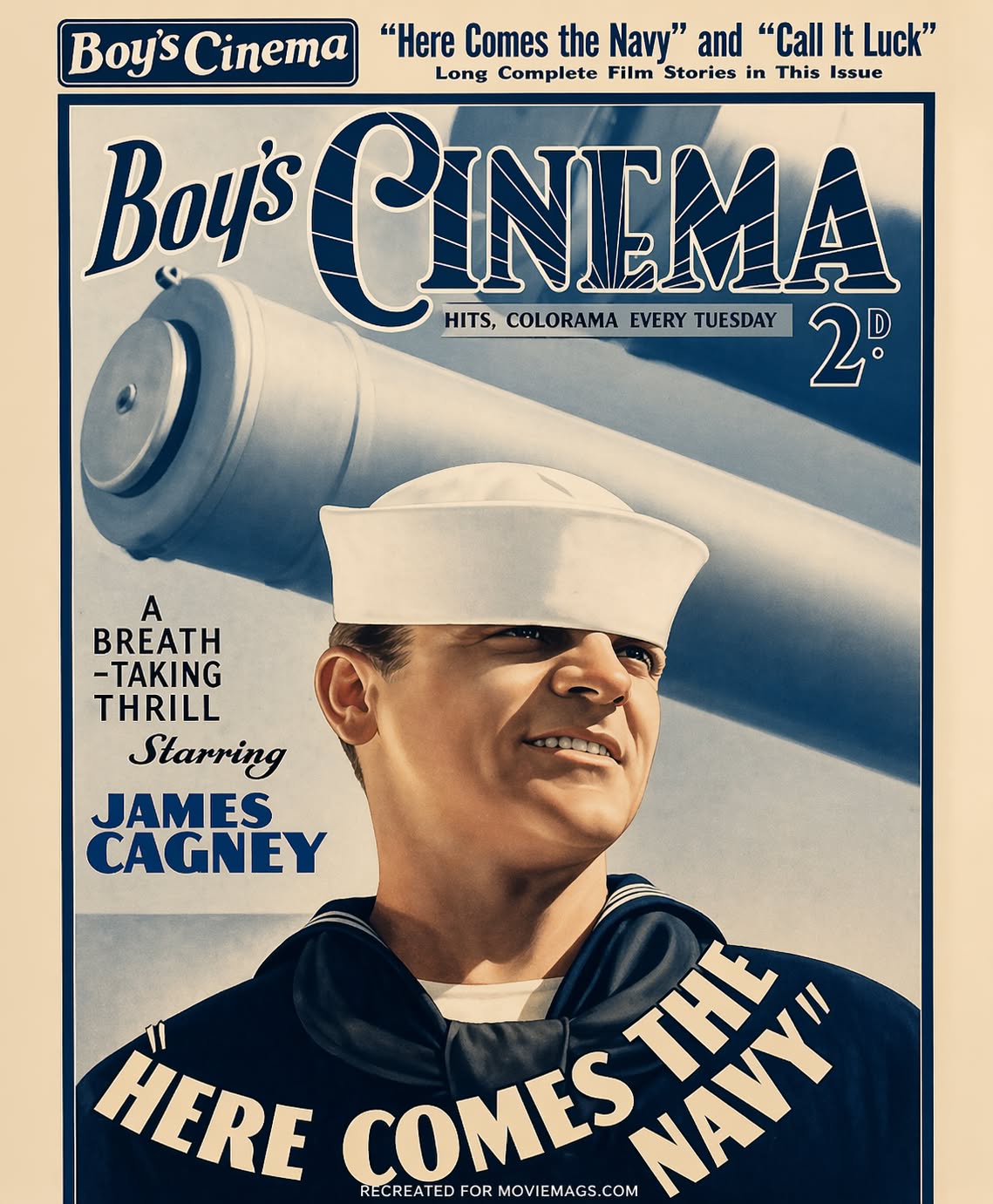
James Cagney was one of the biggest stars of the 1930s, yet his magazine cover presence is surprisingly limited. Despite his enormous popularity, he appeared on far fewer covers than many of his contemporaries-a rare case of a top-tier star with relatively modest representation in fan magazines.
Several factors help explain this:
Warner Bros. promoted Cagney primarily through his films rather than extensive magazine exposure
His tough, working-class persona didn’t align with the romantic, glamorous style favored by magazines like Photoplay and Modern Screen
His rise to stardom was rapid (1931–1933), leaving a relatively short window for heavy cover circulation
He was known to be private and at times resistant to the Hollywood publicity machine
As a result, Cagney’s covers are fewer-and more distinctive-today.
This Boy’s Cinema (1934) issue is the earliest example currently identified in the moviemags.com archive.
Several factors help explain this:
Warner Bros. promoted Cagney primarily through his films rather than extensive magazine exposure
His tough, working-class persona didn’t align with the romantic, glamorous style favored by magazines like Photoplay and Modern Screen
His rise to stardom was rapid (1931–1933), leaving a relatively short window for heavy cover circulation
He was known to be private and at times resistant to the Hollywood publicity machine
As a result, Cagney’s covers are fewer-and more distinctive-today.
This Boy’s Cinema (1934) issue is the earliest example currently identified in the moviemags.com archive.
1930s Top Star #4: Greta Garbo
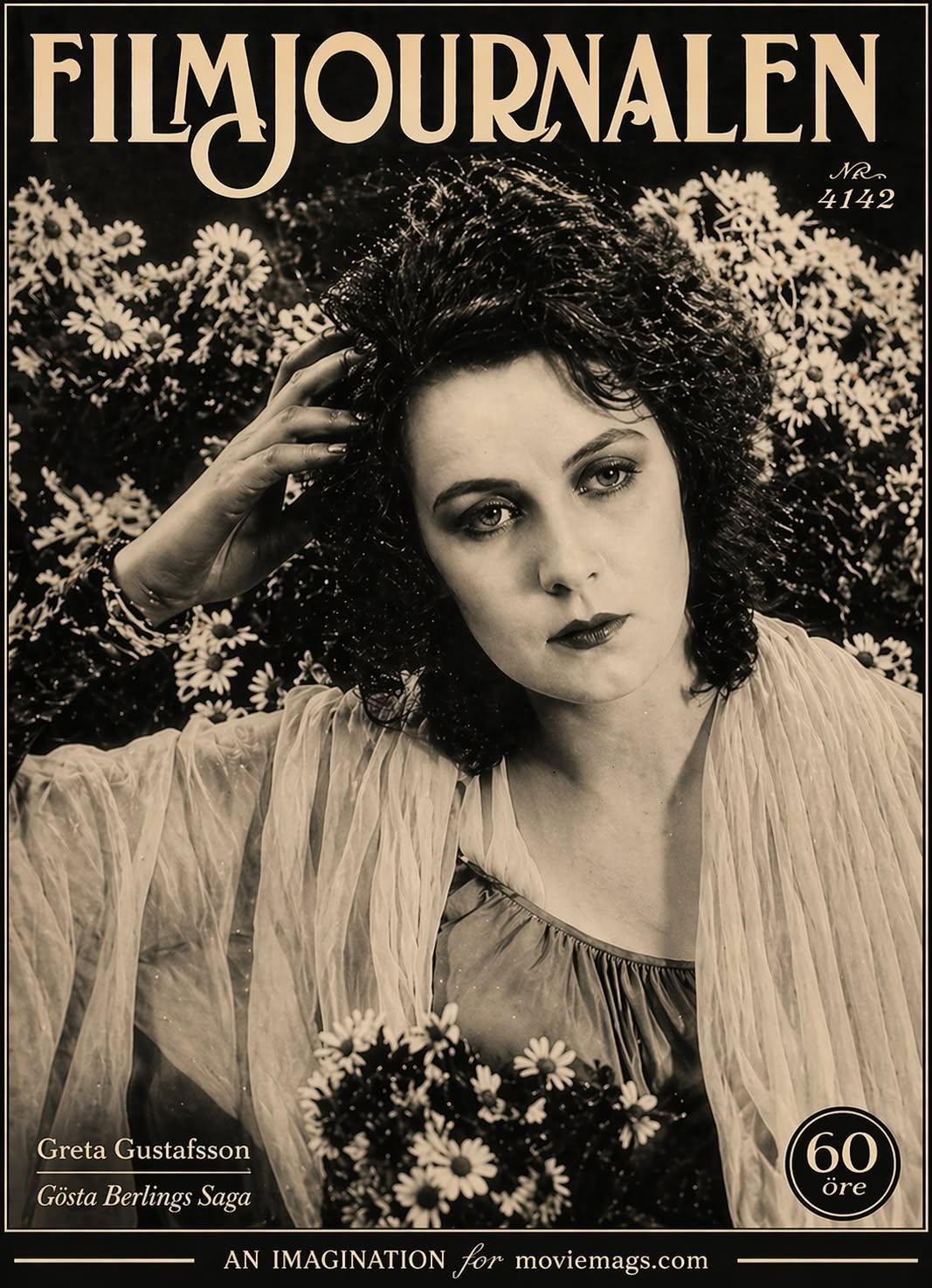
Greta Garbo’s first-ever magazine cover was likely for the Swedish publication Film-Journalen, released on September 23, 1923.
At the time, she was still using her birth name, Greta Gustafsson. She was only 18 years old and had just completed her first major role in the Swedish film The Saga of Gösta Berling (Gösta Berlings saga).
The original magazine is probably lost, or at least no confirmed image of it has surfaced. What you see here is a fantasy cover imagining how it might have looked.
At the time, she was still using her birth name, Greta Gustafsson. She was only 18 years old and had just completed her first major role in the Swedish film The Saga of Gösta Berling (Gösta Berlings saga).
The original magazine is probably lost, or at least no confirmed image of it has surfaced. What you see here is a fantasy cover imagining how it might have looked.
Top 30s Star #3 Joan Crawford

Joan Crawford rose quickly after becoming an MGM “flapper” star in the mid-1920s, especially after films like
Our Dancing Daughters (1928) and
The Taxi Dancer (1927),
along with growing publicity from MGM beginning around 1925–1926.
However, the first magazine cover I have been able to find is this Moving Picture Stories issue from 1927.
Our Dancing Daughters (1928) and
The Taxi Dancer (1927),
along with growing publicity from MGM beginning around 1925–1926.
However, the first magazine cover I have been able to find is this Moving Picture Stories issue from 1927.
First ever Shirley Temple’s magazine cover
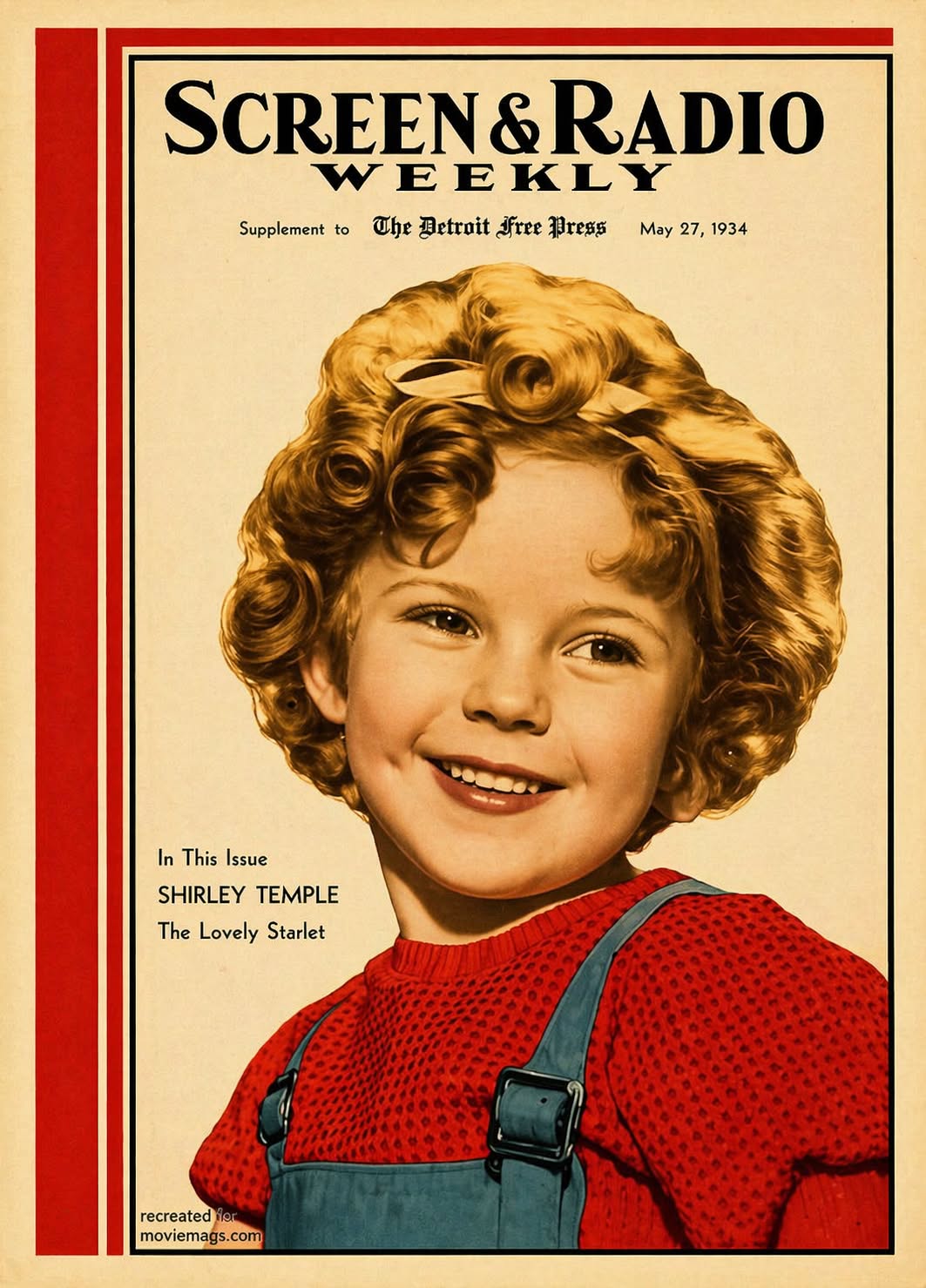
Again, it is not confirmed, but the first magazine cover for Shirley Temple might have been this Screen & Radio Weekly issue from May 27, 1934.
Shirley Temple’s breakout rise happened in 1934 after films like:
Stand Up and Cheer! (1934)
Baby Take a Bow (1934)
Bright Eyes (1934)
Shirley Temple’s breakout rise happened in 1934 after films like:
Stand Up and Cheer! (1934)
Baby Take a Bow (1934)
Bright Eyes (1934)
G & G: Too hot for AI

There is no single universally documented "first ever" Clark Gable magazine cover.
However, when I asked Artificial Intelligence whether this Modern Screen cover from December 1931 might be the earliest one, I received this reply:
"We’re so sorry, but this image may violate our guardrails around lightly sexual or provocative themes."
However, when I asked Artificial Intelligence whether this Modern Screen cover from December 1931 might be the earliest one, I received this reply:
"We’re so sorry, but this image may violate our guardrails around lightly sexual or provocative themes."